
aka Nova 9: Return of Gir Draxon · Nova 9
Nova 9: The Return of Gir Draxon drops you back into the cockpit of the Raven II hover tank to settle an old grudge across nine brutal alien worlds.
Two years after the events of Stellar 7, a distress call pulls Captain John Alex into the Nova 9 system. Gir Draxon survived their previous encounter, and he is back in a massive, horned, skull-faced super-tank that takes three distinct combat phases to finally dismantle. Dynamix designed this sequence as a direct narrative bridge within their sci-fi lineup, setting these events roughly fifty years before the universe of Starsiege and Tribes.
When you jump into this 1991 MS-DOS release, the immediate shock isn't the scale of the campaign, but the handling. Your hover tank drifts with an alarming lack of traction. Squakenet put it plainly in their retrospective, noting that your tank handles like a shopping cart on ice. Turning to line up a shot on an enemy vehicle requires constantly counter-steering against your own inertia while dodging incoming plasma.
Combat plays out entirely from inside the Raven II cockpit, relying heavily on a long-range radar display to track incoming threats. Your primary cannon fires two-shot bursts with unlimited ammunition, but taking down alien tanks, mechanical birds, and minefields requires far more than basic target practice. Up to nine storable power-ups can be beamed into your inventory or scavenged directly from enemy wreckage, offering tactical options like a temporary cloaking device for tight situations.
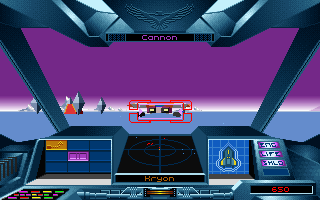
The campaign covers nine themed environments, ranging from a prehistoric world crawling with giant dinosaurs to an insectoid hive-planet. Each stage presents distinct hazards and ends with a boss encounter that demands visual target identification rather than standard strafing. To survive the full run, you need to navigate these mechanical and natural threats in order:
Damage management isn't a simple health bar. When your shields fail, incoming fire breaches internal subsystems, causing specific equipment to malfunction mid-fight. Hidden warp portals placed roughly every two worlds transport you to secret asteroid bases where you can repair damaged gear and buy permanent tank upgrades before tackling the next quadrant.
At release, Dynamix, Inc. brought high-end visual features to MS-DOS hardware. The engine renders solid-polygon pseudo-3D models that rotate smoothly against detailed backgrounds, complemented by rotoscope-style cutscene animations. Published by Sierra On-Line, Inc., the title made full use of VGA color palettes, while maintaining fallback support for EGA, Tandy, and PCjr display modes.
The sound side had just as much technical range. Standard PC internal speakers produced crude beeps for cannon fire, but plugging in a Roland MT-32 or LAPC-I module brought out full digital synth textures. The game also provided native drivers for Sound Blaster, AdLib, Pro Audio Spectrum, Thunderboard, and the Tandy DAC chip.
Contemporary reviewers praised the presentation and overall challenge. Writing for Computer Gaming World in April 1992, Todd Threadgill highlighted the graphics and the thrill of Gir Draxon returning to fight another day. That same month, issue 180 of Dragon Magazine awarded the title 4.5 out of 5 stars in their "Role of Computers" column.
Retrospective critics have been less forgiving of its documentation and physical presentation. Retro Archives pointed out that the box shipped with a paltry two-page manual, leaving players to figure out complex subsystem repairs and radar functions entirely by trial and error. Modern players often struggle with the battlefield movement, where stuttering frame rates on unconfigured setups turn the slippery tank physics into a frustrating exercise in oversteering.
As early 3D action games go, this is a genuine piece of hardware engineering, even if the floating tank physics take twenty minutes to get used to. The multi-phase boss encounters and subsystem damage mechanics give it a tactical edge that straightforward shooters lacked.
You can play Nova 9: The Return of Gir Draxon online free in your browser right now, with nothing to install and no setup required. Jump into the cockpit, keep an eye on your radar screen, and see if you can handle the slippery controls well enough to clear the first world.
Nova 9: The Return of Gir Draxon drops you back into the cockpit of the Raven II hover tank to settle an old grudge across nine brutal alien worlds.
Two years after the events of Stellar 7, a distress call pulls Captain John Alex into the Nova 9 system. Gir Draxon survived their previous encounter, and he is back in a massive, horned, skull-faced super-tank that takes three distinct combat phases to finally dismantle. Dynamix designed this sequence as a direct narrative bridge within their sci-fi lineup, setting these events roughly fifty years before the universe of Starsiege and Tribes.
When you jump into this 1991 MS-DOS release, the immediate shock isn't the scale of the campaign, but the handling. Your hover tank drifts with an alarming lack of traction. Squakenet put it plainly in their retrospective, noting that your tank handles like a shopping cart on ice. Turning to line up a shot on an enemy vehicle requires constantly counter-steering against your own inertia while dodging incoming plasma.
Combat plays out entirely from inside the Raven II cockpit, relying heavily on a long-range radar display to track incoming threats. Your primary cannon fires two-shot bursts with unlimited ammunition, but taking down alien tanks, mechanical birds, and minefields requires far more than basic target practice. Up to nine storable power-ups can be beamed into your inventory or scavenged directly from enemy wreckage, offering tactical options like a temporary cloaking device for tight situations.

The campaign covers nine themed environments, ranging from a prehistoric world crawling with giant dinosaurs to an insectoid hive-planet. Each stage presents distinct hazards and ends with a boss encounter that demands visual target identification rather than standard strafing. To survive the full run, you need to navigate these mechanical and natural threats in order:
Damage management isn't a simple health bar. When your shields fail, incoming fire breaches internal subsystems, causing specific equipment to malfunction mid-fight. Hidden warp portals placed roughly every two worlds transport you to secret asteroid bases where you can repair damaged gear and buy permanent tank upgrades before tackling the next quadrant.
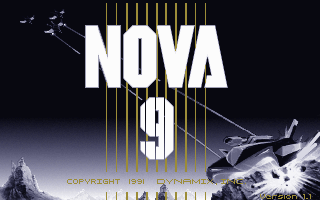
At release, Dynamix, Inc. brought high-end visual features to MS-DOS hardware. The engine renders solid-polygon pseudo-3D models that rotate smoothly against detailed backgrounds, complemented by rotoscope-style cutscene animations. Published by Sierra On-Line, Inc., the title made full use of VGA color palettes, while maintaining fallback support for EGA, Tandy, and PCjr display modes.

The sound side had just as much technical range. Standard PC internal speakers produced crude beeps for cannon fire, but plugging in a Roland MT-32 or LAPC-I module brought out full digital synth textures. The game also provided native drivers for Sound Blaster, AdLib, Pro Audio Spectrum, Thunderboard, and the Tandy DAC chip.
Contemporary reviewers praised the presentation and overall challenge. Writing for Computer Gaming World in April 1992, Todd Threadgill highlighted the graphics and the thrill of Gir Draxon returning to fight another day. That same month, issue 180 of Dragon Magazine awarded the title 4.5 out of 5 stars in their "Role of Computers" column.
Retrospective critics have been less forgiving of its documentation and physical presentation. Retro Archives pointed out that the box shipped with a paltry two-page manual, leaving players to figure out complex subsystem repairs and radar functions entirely by trial and error. Modern players often struggle with the battlefield movement, where stuttering frame rates on unconfigured setups turn the slippery tank physics into a frustrating exercise in oversteering.
As early 3D action games go, this is a genuine piece of hardware engineering, even if the floating tank physics take twenty minutes to get used to. The multi-phase boss encounters and subsystem damage mechanics give it a tactical edge that straightforward shooters lacked.
You can play Nova 9: The Return of Gir Draxon online free in your browser right now, with nothing to install and no setup required. Jump into the cockpit, keep an eye on your radar screen, and see if you can handle the slippery controls well enough to clear the first world.
How Nova 9: The Return of Gir Draxon is played — the keys the game listens to, grouped by what they do.
Highlighted keys are mapped — hover or tap one to see what it does.
Joystick input can be calibrated using Alt-C. Powers can be activated via Q, W, E, A, D, Z, X, C keys or by using the power selector.
The on-screen keyboard and gamepad mapping the browser player uses on a phone, a tablet or a controller, as opposed to the real keys above. $PRO members make their own in the player and share them here; anyone can pick one to play with.
Cheat codes, console commands and memory pokes for Nova 9: The Return of Gir Draxon — each one verified and attributed.
Sign in to submitHow Nova 9: The Return of Gir Draxon is played — the keys the game listens to, grouped by what they do.
Highlighted keys are mapped — hover or tap one to see what it does.
Joystick input can be calibrated using Alt-C. Powers can be activated via Q, W, E, A, D, Z, X, C keys or by using the power selector.
The on-screen keyboard and gamepad mapping the browser player uses on a phone, a tablet or a controller, as opposed to the real keys above. $PRO members make their own in the player and share them here; anyone can pick one to play with.
Cheat codes, console commands and memory pokes for Nova 9: The Return of Gir Draxon — each one verified and attributed.
Sign in to submit