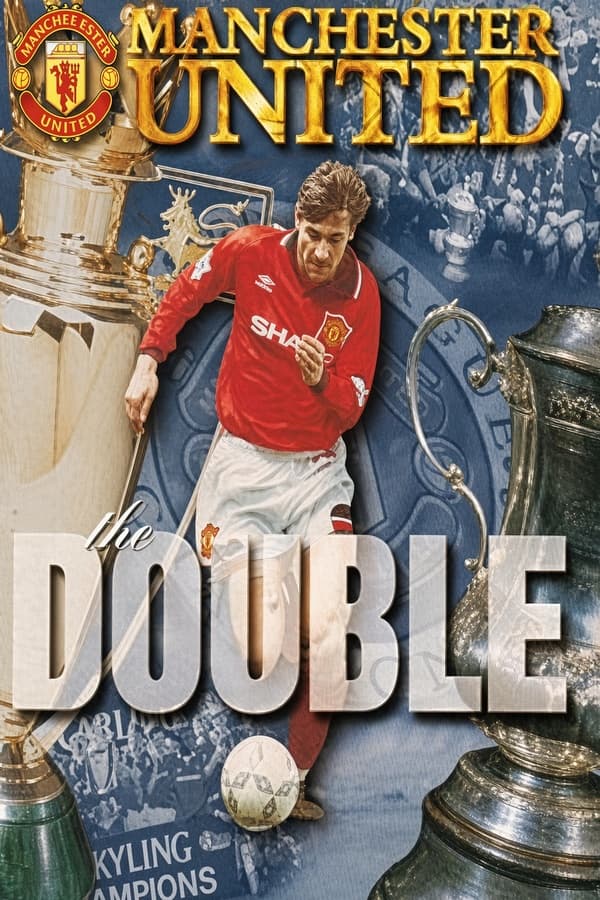
Before football games split into strictly management or arcade simulation, Manchester United: The Double tried to deliver deep tactical authority alongside direct pitch action.
Boot up this 1994 release and you enter a dual world of club management and top-down football action. Krisalis Software Ltd. released the game to celebrate Manchester United winning both the Premier League and the FA Cup in the 1993-94 season. That feat was rare at the time, accomplished by only six clubs in English history.
You can choose to manage Manchester United or take over any team across the top five English divisions. The game asks you to handle squad transfers, line-up selections, and match-day strategy before sending you onto the pitch. Once the referee blows the whistle, you view the match from a top-down perspective that leaves little room to hide your mistakes.
Controlling your players on the pitch relies heavily on short passing and quick movement. The ball does not stick to your boots, forcing you to adjust to loose ball physics similar to classic arcade titles like Kick Off. Scoring in your first few matches is notoriously difficult while you get a feel for the ball control.
The default MS-DOS keyboard layout makes early matches even harder. By default, the game maps movement to O for left, P for right, Q for up, and A for down. Navigating a crowded penalty box with that finger arrangement takes real practice, and plug-in gamepads offer a much smoother experience.
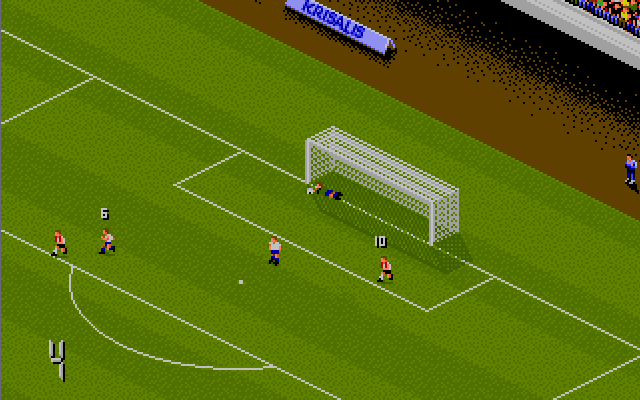
Where this title steps past simple arcade football is its comprehensive tactical suite. The built-in Tacti-Grid system lets you dictate player movements depending on exactly where the ball is on the field. If your left winger wanders out of position, you can open the grid and assign precise movement markers to keep your formation tight.
Beyond formation tweaking, the editor gives you sweeping powers over your league. You can rename individual players, adjust their skill attributes, alter team kits, and move entire clubs between divisions. That level of customization made the Manchester United: The Double MS-DOS game a flexible sandbox for football fans in 1994.
The management suite covers the operational side of the club as well. Arranging player transfers and balancing squad depth means you cannot simply rely on pitch skills to win titles. A weak bench will catch up with you over a long season, no matter how well you pass on match day.
Developer Krisalis Software Ltd. built this as their fourth licensed title for the club. They clearly understood that fans wanted more than standard arcade action, so they leaned heavily into squad customization.
When match play gets intense, the match engine shows a few strange quirks. Aerial duels are the most obvious example. When two players leap for a header, they frequently launch roughly five meters straight into the air and float down with surreal hang-time before connecting with the ball.
Scoring a goal brings a surprise reward. Every time the ball hits the net, the match pauses to play one of five digitized black-and-white video clips celebrating the score. When most PC games were still relying on static art, seeing actual video footage after a hard fight down the pitch felt like a massive event.
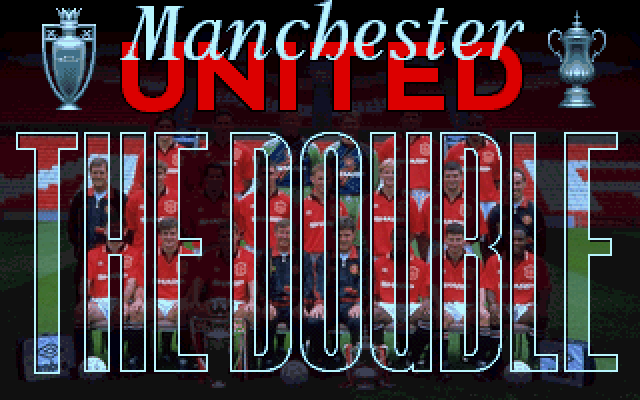
The sound design adds plenty of stadium atmosphere to matches. Sound cards of the day deliver digitized crowd chants, complete with clear audio of supporters shouting "United, United" from the stands. That localized atmosphere helped ground the action, even when player sprites were hopping five meters off the grass.
Interestingly, international markets received custom editions of the title. In Germany, local distributors removed the English branding and released the title under the name Lothar Matthäus Super Soccer. Despite the name change, the core gameplay engine and Tacti-Grid editor remained completely intact.
Evaluating the game today means recognizing where the engine struggles compared to pure action titles. Period reviewers praised the impressive editor options, but many noted that the pitch engine lacked the smooth responsiveness of dedicated arcade competitors. The combination of pitch play and squad management was ambitious, even if the action fell slightly short of top-tier action games.
Success on the pitch depends on how effectively you use the short passing mechanics. Long range shots rarely beat the keeper without clean setup play. You need to work the ball into space using quick passes, then line up your strike without getting tackled by aggressive defenders.
Here are the key systems you must master to win trophies:
If you enjoy simulation games that mix high-level tactics with hands-on control, this release offers a fascinating hybrid approach. It captures a specific moment in sports gaming before management software and arcade action separated permanently.
You can play Manchester United: The Double online free in your browser right now with no setup required. The game launches instantly inside your browser window, letting you dive straight into squad management or test your passing skills on the pitch without installing old software.
Running the game in a modern browser reveals just how tense those tight match finishes can be when you are clinging to a one-goal lead. Set up your Tacti-Grid formations, select your squad, and see if you can guide your club through a full season. You can experience Manchester United: The Double free in your browser today and take control of the pitch yourself.
Before football games split into strictly management or arcade simulation, Manchester United: The Double tried to deliver deep tactical authority alongside direct pitch action.
Boot up this 1994 release and you enter a dual world of club management and top-down football action. Krisalis Software Ltd. released the game to celebrate Manchester United winning both the Premier League and the FA Cup in the 1993-94 season. That feat was rare at the time, accomplished by only six clubs in English history.
You can choose to manage Manchester United or take over any team across the top five English divisions. The game asks you to handle squad transfers, line-up selections, and match-day strategy before sending you onto the pitch. Once the referee blows the whistle, you view the match from a top-down perspective that leaves little room to hide your mistakes.
Controlling your players on the pitch relies heavily on short passing and quick movement. The ball does not stick to your boots, forcing you to adjust to loose ball physics similar to classic arcade titles like Kick Off. Scoring in your first few matches is notoriously difficult while you get a feel for the ball control.
The default MS-DOS keyboard layout makes early matches even harder. By default, the game maps movement to O for left, P for right, Q for up, and A for down. Navigating a crowded penalty box with that finger arrangement takes real practice, and plug-in gamepads offer a much smoother experience.
Where this title steps past simple arcade football is its comprehensive tactical suite. The built-in Tacti-Grid system lets you dictate player movements depending on exactly where the ball is on the field. If your left winger wanders out of position, you can open the grid and assign precise movement markers to keep your formation tight.
Beyond formation tweaking, the editor gives you sweeping powers over your league. You can rename individual players, adjust their skill attributes, alter team kits, and move entire clubs between divisions. That level of customization made the Manchester United: The Double MS-DOS game a flexible sandbox for football fans in 1994.
The management suite covers the operational side of the club as well. Arranging player transfers and balancing squad depth means you cannot simply rely on pitch skills to win titles. A weak bench will catch up with you over a long season, no matter how well you pass on match day.
Developer Krisalis Software Ltd. built this as their fourth licensed title for the club. They clearly understood that fans wanted more than standard arcade action, so they leaned heavily into squad customization.
When match play gets intense, the match engine shows a few strange quirks. Aerial duels are the most obvious example. When two players leap for a header, they frequently launch roughly five meters straight into the air and float down with surreal hang-time before connecting with the ball.
Scoring a goal brings a surprise reward. Every time the ball hits the net, the match pauses to play one of five digitized black-and-white video clips celebrating the score. When most PC games were still relying on static art, seeing actual video footage after a hard fight down the pitch felt like a massive event.
The sound design adds plenty of stadium atmosphere to matches. Sound cards of the day deliver digitized crowd chants, complete with clear audio of supporters shouting "United, United" from the stands. That localized atmosphere helped ground the action, even when player sprites were hopping five meters off the grass.
Interestingly, international markets received custom editions of the title. In Germany, local distributors removed the English branding and released the title under the name Lothar Matthäus Super Soccer. Despite the name change, the core gameplay engine and Tacti-Grid editor remained completely intact.
Evaluating the game today means recognizing where the engine struggles compared to pure action titles. Period reviewers praised the impressive editor options, but many noted that the pitch engine lacked the smooth responsiveness of dedicated arcade competitors. The combination of pitch play and squad management was ambitious, even if the action fell slightly short of top-tier action games.
Success on the pitch depends on how effectively you use the short passing mechanics. Long range shots rarely beat the keeper without clean setup play. You need to work the ball into space using quick passes, then line up your strike without getting tackled by aggressive defenders.
Here are the key systems you must master to win trophies:
If you enjoy simulation games that mix high-level tactics with hands-on control, this release offers a fascinating hybrid approach. It captures a specific moment in sports gaming before management software and arcade action separated permanently.
You can play Manchester United: The Double online free in your browser right now with no setup required. The game launches instantly inside your browser window, letting you dive straight into squad management or test your passing skills on the pitch without installing old software.
Running the game in a modern browser reveals just how tense those tight match finishes can be when you are clinging to a one-goal lead. Set up your Tacti-Grid formations, select your squad, and see if you can guide your club through a full season. You can experience Manchester United: The Double free in your browser today and take control of the pitch yourself.
How Manchester United: The Double is played — the keys the game listens to, grouped by what they do.
Highlighted keys are mapped — hover or tap one to see what it does.
The default keyboard layout maps movement to Q, A, O, P rather than standard arrow keys. Remap keys or check setup before playing.
The on-screen keyboard and gamepad mapping the browser player uses on a phone, a tablet or a controller, as opposed to the real keys above. $PRO members make their own in the player and share them here; anyone can pick one to play with.
Cheat codes, console commands and memory pokes for Manchester United: The Double — each one verified and attributed.
Sign in to submitaka Lothar Matthäus Super Soccer
How Manchester United: The Double is played — the keys the game listens to, grouped by what they do.
Highlighted keys are mapped — hover or tap one to see what it does.
The default keyboard layout maps movement to Q, A, O, P rather than standard arrow keys. Remap keys or check setup before playing.
The on-screen keyboard and gamepad mapping the browser player uses on a phone, a tablet or a controller, as opposed to the real keys above. $PRO members make their own in the player and share them here; anyone can pick one to play with.
Cheat codes, console commands and memory pokes for Manchester United: The Double — each one verified and attributed.
Sign in to submit