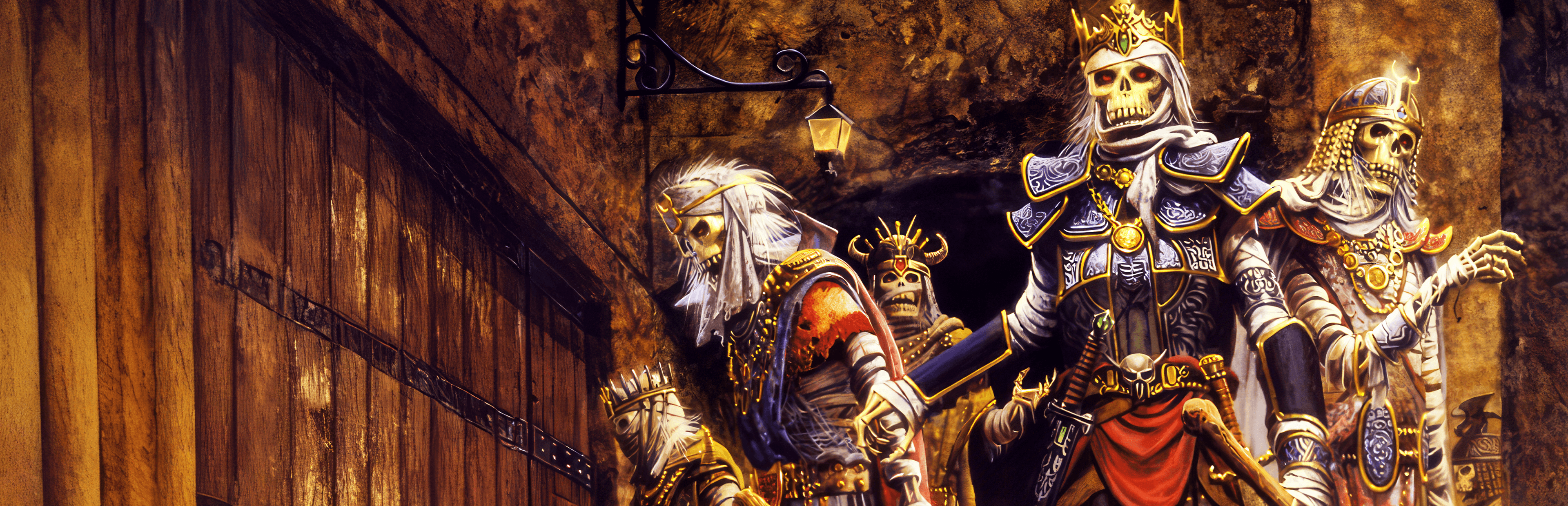
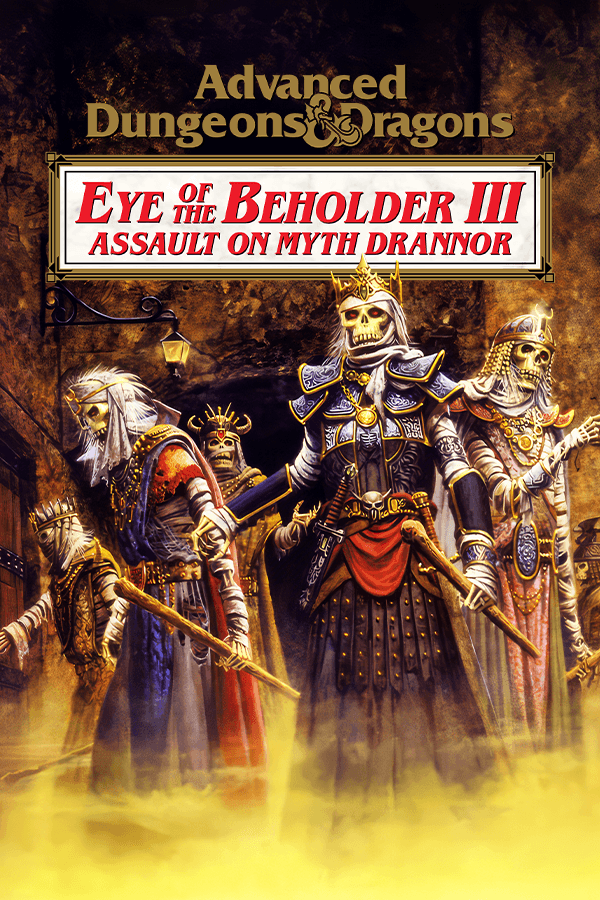
Taking your party out of the dark corridors and into the overgrown ruins of Myth Drannor, Eye of The Beholder III: Assault on Myth Drannor tries to scale up real-time dungeon crawling with outdoor maps, second-row polearm attacks, and an all-party attack button. Yet the friction of its interface and a clunky internal engine mean victory often comes down to wrestling with your inventory while ghosts drain your level.
When Westwood Studios parted ways with Strategic Simulations, Inc. after finishing the second game, SSI opted to build the final chapter on their own. Producer Nicholas Beliaeff and programmer John Miles adapted the AESOP engine, the same code platform used for Dungeon Hack, trying to match the familiar interface of the earlier titles. The shift altered how the software handled memory, which instantly broke popular third-party RAM scanners like All-Seeing Eye that players relied on for automapping.
The new engine brought noticeable performance drag compared to Westwood's nimble grid crawler. While sound cards like the Roland MT-32 and General MIDI delivered rich music, digitized sound effects on standard Sound Blaster hardware required 1 MB of EMS memory and often came across as loud, harsh thuds and screeches. The loss of original development team polish showed early, making simple steps forward feel heavier than before.
You begin in a Waterdeep tavern where a mysterious figure teleports your party straight into the Burial Glen. From there, you march through a mausoleum, navigate the Mage Guild, and enter the ruined Temple of Lathander to recover the Codex and destroy the Lich Acwellan. The opening wilderness forces you to swing axes at walls of trees, testing individual forest tiles one by one until you hit the precise secret path forward.
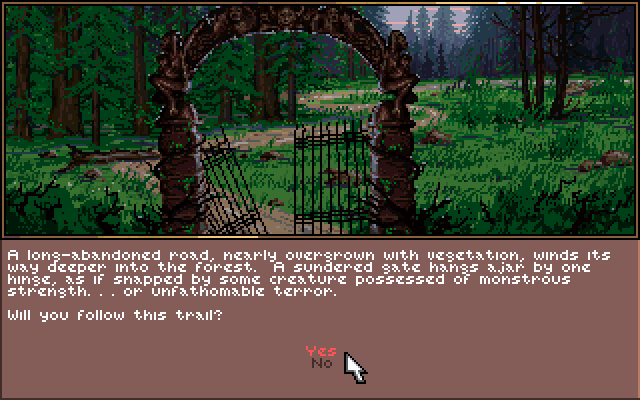
Combat remains standard real-time grid action, but executing simple maintenance in the middle of a fight is notoriously clumsy. Healing a poisoned fighter means right-clicking to unequip their weapon, dragging a potion into the vacant hand, right-clicking again to drink, and swapping the weapon back while grave mists and hags claw at your front line. Managing spellbooks mid-battle creates identical bottlenecks, leaving your spellcasters open while you hunt through tiny screens.
The designers introduced a few practical combat tweaks to shorten the manual clicking, though they only partially alleviate the interface strain:
When the game hit store shelves in 1993, gaming magazines were mixed, while dedicated dungeon crawlers reacted with sharp criticism. Writing for Computer Gaming World, reviewer Scorpia famously panned the title under the header "Hit or Myth-Demeanor?", pointing out how abrupt the plot felt and how tedious navigation became. European outlets were slightly more forgiving, with Joystick awarding an 86% while PC Zone scored it 64% and PC Review handed down a 6/10.
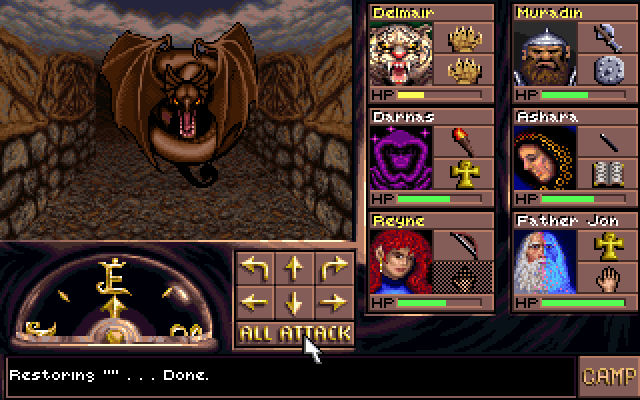
Much of that frustration stemmed from how quickly SSI pushed the project out. Facing severe financial pressure and competing directly against Westwood's own Lands of Lore, the studio delivered a quest line that felt noticeably brief compared to its grand build-up. Sudden difficulty spikes paired with uncoordinated real-time spellcasting meant players frequently lost party members to high-level undead before they could even open a menu.
Inside the dungeons, puzzle design leans heavily on cryptic room triggers and obscured floor plates. Searching the Warriors Tomb or the Mage Guild requires sweeping your cursor across walls for tiny stone buttons, all while managing light sources and inventory limits. Unlike traditional turn-based role-playing (RPG) games, taking a moment to think about a puzzle solution often means an undead spawn creeps up behind your rear line.
For players who built up attached characters in the second installment, importing that veteran crew gives a necessary head start against the opening enemies. A newly created party can survive, but they face a far steeper wall of damage in the early forest clearings. Finding high-tier priest crosses and scrolls early becomes vital if you expect your frontline fighters to survive incoming magic.
This entry is the clunkiest of the trilogy, bogged down by inventory chores and a hasty campaign structure. Yet for anyone who spent dozens of hours conquering the first two titles, finishing the journey and taking down Acwellan brings a clear sense of closure. If you step in expecting standard real-time grid combat and keep a close eye on your spellbook slots, there is plenty of classic Gold Box era flavor to extract from these ruins.
You can play Eye of The Beholder III: Assault on Myth Drannor free in your browser right here on this site, with no software setup required. Fire up this classic MS-DOS game online, import your favorite party from the second game or roll a new group of six, and start hacking through the woods of Myth Drannor today.
Taking your party out of the dark corridors and into the overgrown ruins of Myth Drannor, Eye of The Beholder III: Assault on Myth Drannor tries to scale up real-time dungeon crawling with outdoor maps, second-row polearm attacks, and an all-party attack button. Yet the friction of its interface and a clunky internal engine mean victory often comes down to wrestling with your inventory while ghosts drain your level.
When Westwood Studios parted ways with Strategic Simulations, Inc. after finishing the second game, SSI opted to build the final chapter on their own. Producer Nicholas Beliaeff and programmer John Miles adapted the AESOP engine, the same code platform used for Dungeon Hack, trying to match the familiar interface of the earlier titles. The shift altered how the software handled memory, which instantly broke popular third-party RAM scanners like All-Seeing Eye that players relied on for automapping.
The new engine brought noticeable performance drag compared to Westwood's nimble grid crawler. While sound cards like the Roland MT-32 and General MIDI delivered rich music, digitized sound effects on standard Sound Blaster hardware required 1 MB of EMS memory and often came across as loud, harsh thuds and screeches. The loss of original development team polish showed early, making simple steps forward feel heavier than before.
You begin in a Waterdeep tavern where a mysterious figure teleports your party straight into the Burial Glen. From there, you march through a mausoleum, navigate the Mage Guild, and enter the ruined Temple of Lathander to recover the Codex and destroy the Lich Acwellan. The opening wilderness forces you to swing axes at walls of trees, testing individual forest tiles one by one until you hit the precise secret path forward.
Combat remains standard real-time grid action, but executing simple maintenance in the middle of a fight is notoriously clumsy. Healing a poisoned fighter means right-clicking to unequip their weapon, dragging a potion into the vacant hand, right-clicking again to drink, and swapping the weapon back while grave mists and hags claw at your front line. Managing spellbooks mid-battle creates identical bottlenecks, leaving your spellcasters open while you hunt through tiny screens.
The designers introduced a few practical combat tweaks to shorten the manual clicking, though they only partially alleviate the interface strain:
When the game hit store shelves in 1993, gaming magazines were mixed, while dedicated dungeon crawlers reacted with sharp criticism. Writing for Computer Gaming World, reviewer Scorpia famously panned the title under the header "Hit or Myth-Demeanor?", pointing out how abrupt the plot felt and how tedious navigation became. European outlets were slightly more forgiving, with Joystick awarding an 86% while PC Zone scored it 64% and PC Review handed down a 6/10.
Much of that frustration stemmed from how quickly SSI pushed the project out. Facing severe financial pressure and competing directly against Westwood's own Lands of Lore, the studio delivered a quest line that felt noticeably brief compared to its grand build-up. Sudden difficulty spikes paired with uncoordinated real-time spellcasting meant players frequently lost party members to high-level undead before they could even open a menu.
Inside the dungeons, puzzle design leans heavily on cryptic room triggers and obscured floor plates. Searching the Warriors Tomb or the Mage Guild requires sweeping your cursor across walls for tiny stone buttons, all while managing light sources and inventory limits. Unlike traditional turn-based role-playing (RPG) games, taking a moment to think about a puzzle solution often means an undead spawn creeps up behind your rear line.
For players who built up attached characters in the second installment, importing that veteran crew gives a necessary head start against the opening enemies. A newly created party can survive, but they face a far steeper wall of damage in the early forest clearings. Finding high-tier priest crosses and scrolls early becomes vital if you expect your frontline fighters to survive incoming magic.
This entry is the clunkiest of the trilogy, bogged down by inventory chores and a hasty campaign structure. Yet for anyone who spent dozens of hours conquering the first two titles, finishing the journey and taking down Acwellan brings a clear sense of closure. If you step in expecting standard real-time grid combat and keep a close eye on your spellbook slots, there is plenty of classic Gold Box era flavor to extract from these ruins.
You can play Eye of The Beholder III: Assault on Myth Drannor free in your browser right here on this site, with no software setup required. Fire up this classic MS-DOS game online, import your favorite party from the second game or roll a new group of six, and start hacking through the woods of Myth Drannor today.
How Eye of The Beholder III: Assault on Myth Drannor is played — the keys the game listens to, grouped by what they do.
Highlighted keys are mapped — hover or tap one to see what it does.
Key mapping compiled from retrieved reference notes for Eye of the Beholder III on MS-DOS.
The on-screen keyboard and gamepad mapping the browser player uses on a phone, a tablet or a controller, as opposed to the real keys above. $PRO members make their own in the player and share them here; anyone can pick one to play with.
Cheat codes, console commands and memory pokes for Eye of The Beholder III: Assault on Myth Drannor — each one verified and attributed.
Sign in to submitaka アイ・オブ・ザ・ビホルダーIII · EOB3 · Official Advanced Dungeons & Dragons Computer Product : Eye of the Beholder III Assault on Myth Drannor – GRAND FINALE!
How Eye of The Beholder III: Assault on Myth Drannor is played — the keys the game listens to, grouped by what they do.
Highlighted keys are mapped — hover or tap one to see what it does.
Key mapping compiled from retrieved reference notes for Eye of the Beholder III on MS-DOS.
The on-screen keyboard and gamepad mapping the browser player uses on a phone, a tablet or a controller, as opposed to the real keys above. $PRO members make their own in the player and share them here; anyone can pick one to play with.
Cheat codes, console commands and memory pokes for Eye of The Beholder III: Assault on Myth Drannor — each one verified and attributed.
Sign in to submit